
As the world bids adieu to the old and welcomes the new, we look at New Year’s traditions that are equal parts laughter and legacy.
From Ireland’s cleaning crusade to Scotland’s first-footing fiesta, these customs bring a dash of whimsy to the turning of the calendar.
Fiery Celebrations
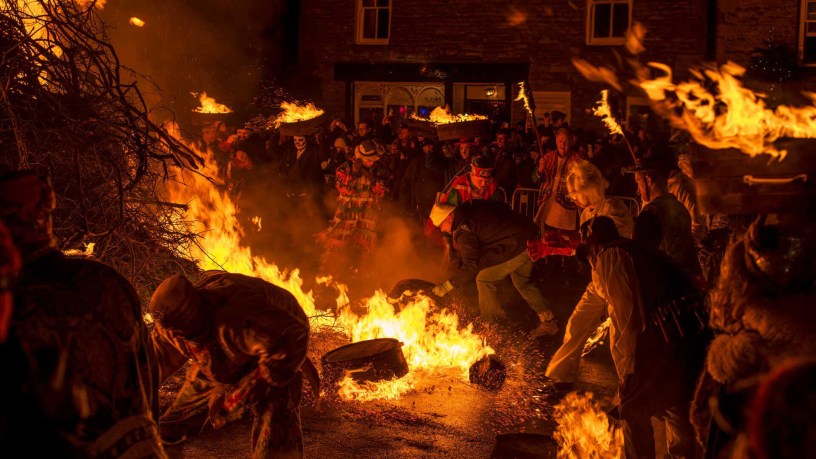
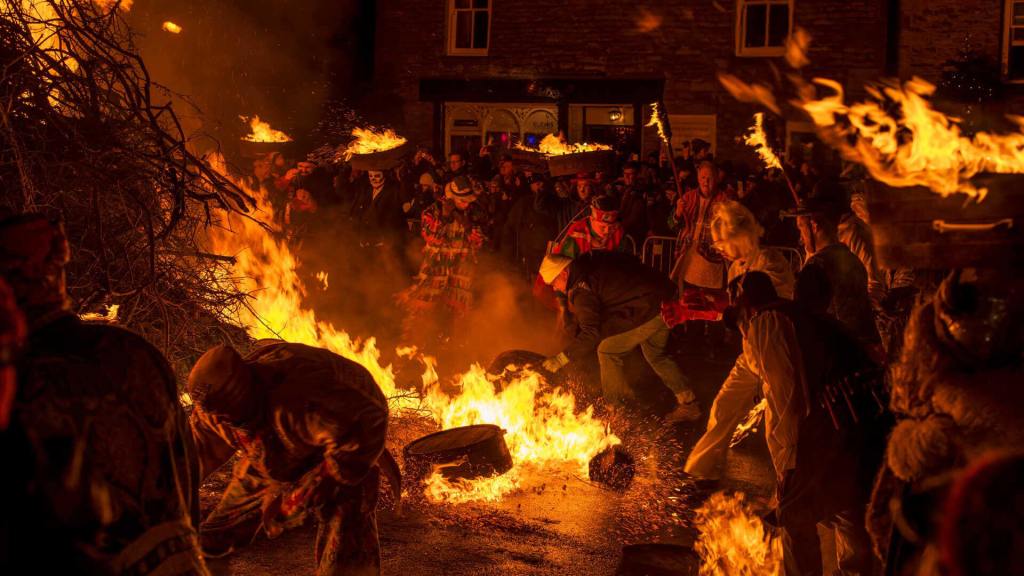
Fire takes the spotlight in Scotland. The famous fireworks and torchlight procession in Edinburgh are reminiscent of Hogmanay pagan and Viking celebrations where bonfires were lit, blazing tar barrels were rolled down hills and lit torches were tossed. Stonehaven’s fireball swinging could rival any Cirque du Soleil act. Evil spirits, take cover!
The astonishing Allendale Tar Bar’l is Northumberland’s sizzling hot New Year’s Eve ceremony that has been celebrated for centuries. This weird tradition involves 45 local men carrying burning whisky barrels on their heads through the town.
In Wales, the New Year isn’t complete without a soundtrack of fireworks and the crackling of bonfires.
Clean Sweep
The Irish kick off the year with a bang, or should we say, a sweep. The early spring clean isn’t just a chore; it’s a declaration of war against post-Christmas gloom. Banging bread on doors to chase away bad luck? Well, that’s just the Irish way of making an entrance.
Meanwhile, the Scots take it a step further with a decluttering mission. Before the clock strikes twelve, debts are paid, and homes are swept clean — both literally and metaphorically.
Door Drama and First-Footing Fun
In Ireland, the first person through the door on January 1st holds the keys to the year’s vibes. A dark-haired stranger means good fortune, but a red-headed woman? Cue the ominous music. It’s like casting for the drama of the year.
Not to be outdone, the Scots put on a first-footing fiesta. The first person to enter a home after the bells toll is the VIP of the night. Dark-haired, bearing symbolic gifts, this character sets the tone for the year.
Auld Lang Syne
When the clock strikes midnight in Scotland, it’s not just about the bells. It’s a full-blown musical with Auld Lang Syne as the anthem.
In parts of England, particularly in apple orchard regions, the tradition of wassailing takes centre stage. Villagers gather to sing to the apple trees, ensuring a fruitful harvest in the coming year. It’s like a concert for crops, where the encore is a bountiful yield.
Dreamy Superstitions
Irish singles have a dreamy tradition of tucking mistletoe, holly, or ivy under their pillows on January 1st. Why? To dream up their future partners. It’s like a botanical Tinder, but with a higher chance of actual sparks.
Meanwhile, Scots are busy saining their homes, blessing them with water from a river ford and burning juniper branches. Opening windows and doors? That’s the ultimate invitation for a fresh start. Move over, Feng Shui!
Table for the Departed
In Ireland, the New Year’s Day dinner is not just for the living. Families set a place at the table for those who departed in the past year, leaving the door unlatched. It’s a poignant reminder that some traditions are a bridge between the worlds.
On the Isle of Man, the New Year’s Eve celebration, known as Oie’ll Verrey, involves mummers going door-to-door in masked performances.
New Year, New Me
The Manx are onboard the resolution train. From hitting the gym to mastering the bagpipes, the Isle of Man is all about starting the year with a to-do list.
Forget Resolutions, the Welsh are feasting on New Year’s Day. Welsh cakes are the stars of the show, ensuring that the year starts on a sugar high.
Brittany does feasts differently. The Feast of the Seven Meat Stew isn’t just a meal; it’s a prophecy of prosperity. Seven meats for seven flavours, and the promise of a year that’s as diverse as your dinner.
Twelfth Night
In some English households, the Christmas season isn’t officially over until January 6th, known as Twelfth Night. It’s a night of revelry and cake-cutting where hidden charms in the cake foretell the future. Move aside, crystal balls; cakes are the new fortune-tellers.
In Ireland, Women’s Little Christmas, or Nollaig na mBan, is also celebrated on January 6th. It is a day for women to take a break from the holiday responsibilities.

