
Imbolc, also known as Saint Brigid’s Day, is celebrated on February 1st in Ireland and the Celtic Nations, marking the halfway point between the winter solstice and spring equinox. Traditionally, Imbolc signified the beginning of spring and the stirring of new life. In ancient times, it was a festival of light and fertility, with a focus on the return of the sun and the hopeful end of winter’s harshness. It honours Brigid, a goddess in pre-Christian Ireland associated with fire, poetry, healing, and smith-craft, who later became venerated as Saint Brigid in the Christian era.
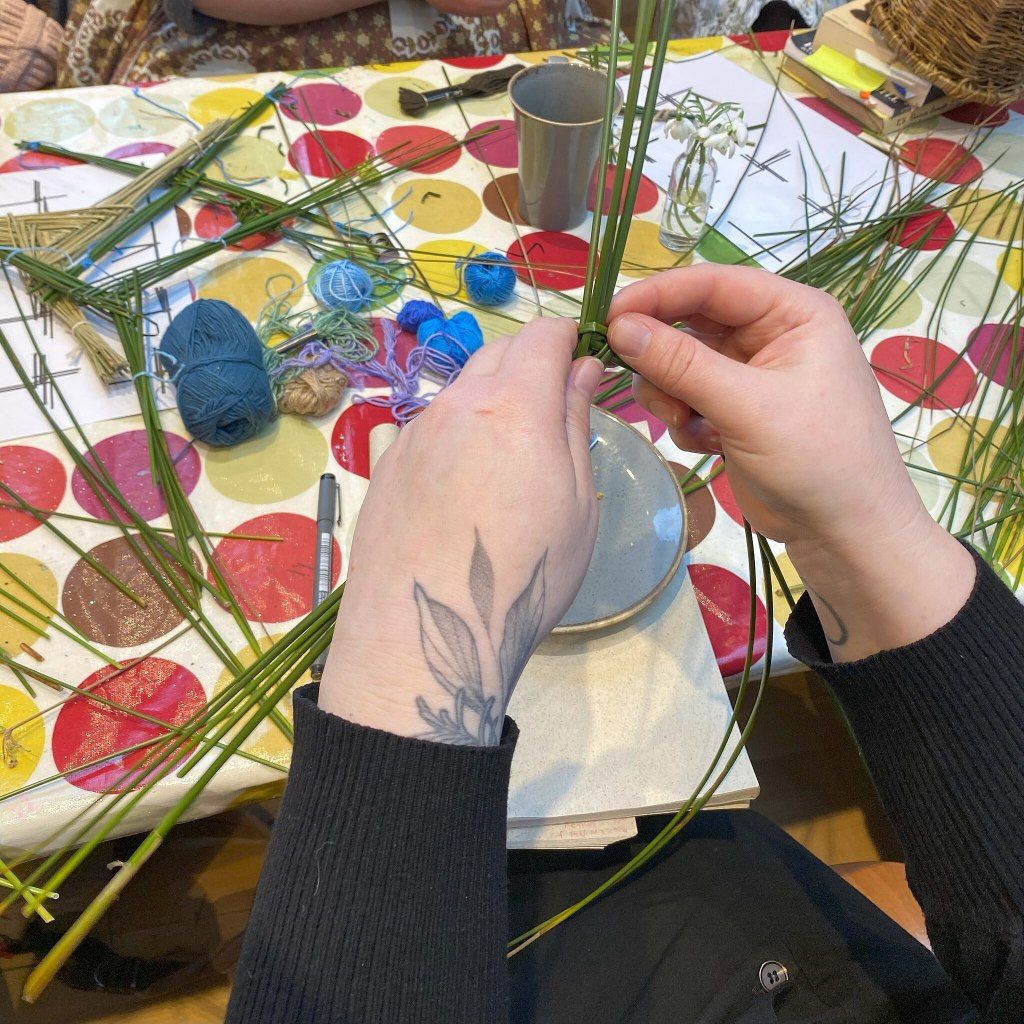
Customs around Imbolc involve various rituals for protection, luck, and welcoming of the new season. In Ireland, a central tradition is the crafting of the St Brigid’s Cross, woven from reeds or rushes and shaped in a distinctive four-armed design. These crosses are often hung above doors or in homes to invite blessings and protection for the coming year. Another practice is to leave a cloth, known as Brat Bhríde, outside overnight on St Brigid’s Eve to be blessed by the saint. It’s believed the cloth would hold her healing powers, useful for curing illnesses or protecting the household.
In rural areas, people once practiced rituals that centred on the home and hearth, aligning with Brigid’s association with domestic life and the hearth fire. Families would sometimes prepare a small bed or “Brideog” (a doll representing Brigid) to invite her spirit into the home. In some places, children dressed up and went door-to-door with the Brideog, symbolising the welcoming of spring.
Modern Ireland celebrates Imbolc and St Brigid’s Day with festivals, crafts, music, and prayers, blending ancient traditions with contemporary customs. St Brigid’s Day has also become a celebration of Irish women, inspired by the powerful symbolism of Brigid as both goddess and saint, representing strength, nurturing, and renewal in Irish culture.
In Scotland, Imbolc customs are closely related to those in Ireland, especially given the shared reverence for Brigid, known there as Bride. Scottish lore speaks of Bride as the “bringer of light”, with tales of her spreading warmth to drive away winter. Some Scottish communities mark Imbolc by crafting Bride dolls or setting out a “Bride’s bed” near the hearth to invite her blessings into the home – practices that echo Irish customs.
On the Isle of Man, Imbolc is called Laa’l Breeshey, or St Brigid’s Day. Here, people traditionally light small fires or candles as a symbol of hope and renewal, reflecting Brigid’s association with fire and light. Some Manx customs also involve blessing the land and livestock, reflecting the rural community’s focus on new growth.
In Wales, Imbolc is sometimes linked to St Dwynwen’s Day, celebrated in January, although it’s not a direct equivalent. Some Welsh traditions align with early spring practices, such as blessing homes and livestock in February, but Imbolc itself is less widely observed there in modern times.
Across these Celtic regions, Imbolc has recently seen a revival, often celebrated in contemporary festivals that combine ancient customs with music, crafts, and community gatherings, honouring the spirit of renewal and Brigid’s legacy.
Pictures: Main – Making a three-armed Saint Brigid’s cross from reeds at a Beltane Fire Society event for Imbolc 2024 in Edinburgh, Scotland. Credit: Lirazelf on Wikimedia Commons
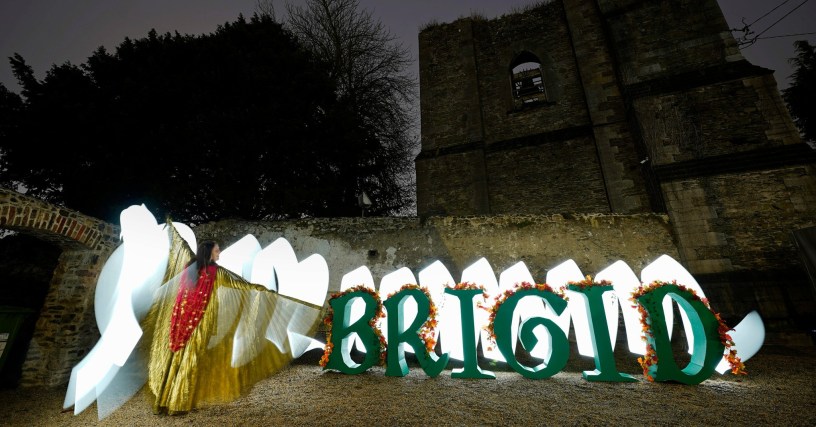
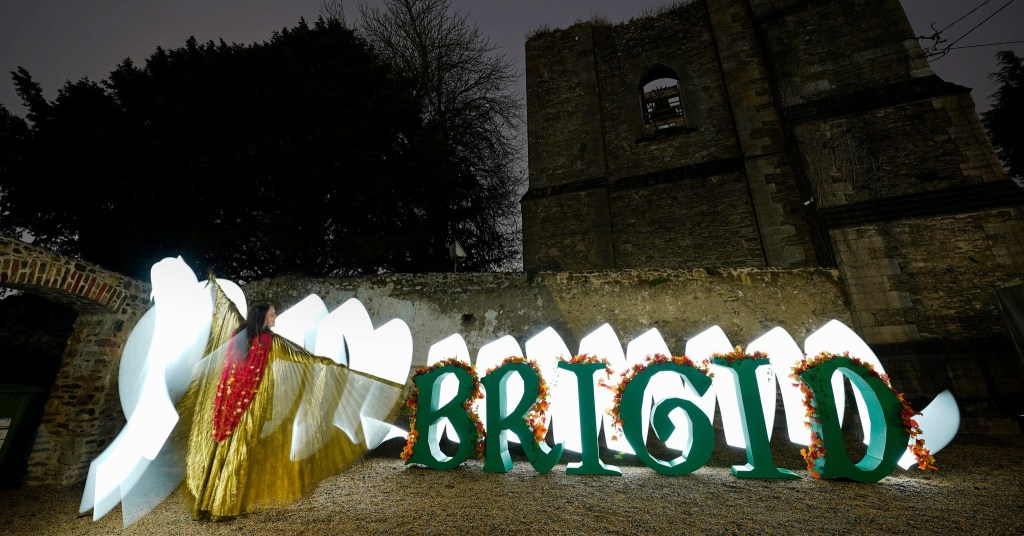
And, above: The launch of Brigid | Spirit of Kildare, a programme of events and activities to celebrate and commemorate Saint Brigid in Ireland in 2025. Picture: Facebook.com/Spirit of Brigid


