
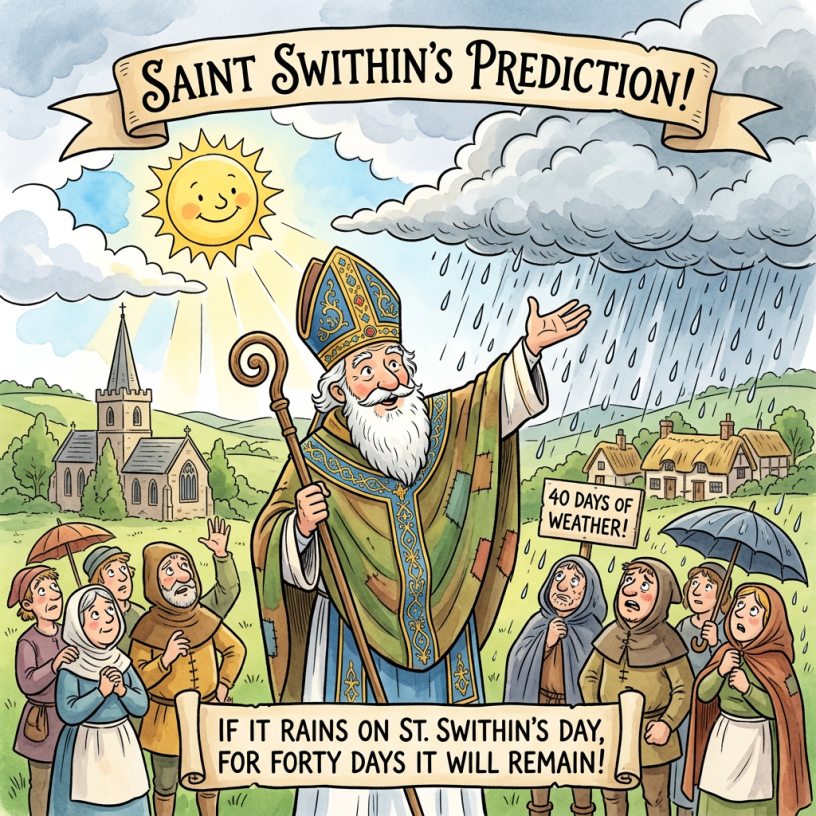
Will it rain for the next 40 days? According to one of England’s oldest weather traditions, the answer may have been decided on 15 July.
Every year, St Swithun’s Day revives one of the best-known pieces of English folklore, with generations recalling the famous rhyme:
St Swithun’s Day if thou dost rain,
For forty days it will remain;
St Swithun’s Day if thou be fair,
For forty days ’twill rain nae mair.
While modern meteorologists are quick to point out there’s no scientific evidence that the weather on 15 July determines the next 40 days, the legend has endured for centuries and remains one of the most charming traditions in the English calendar.
Who was St Swithun?
St Swithun (sometimes spelled Swithin) was Bishop of Winchester in southern England during the ninth century, serving from AD 852 until his death in 862.
Renowned for his humility and generosity, he requested to be buried outside Winchester’s Old Minster, where rain could fall upon his grave and ordinary people would walk over it. Nearly 110 years later, on 15 July 971, church leaders decided to move his remains to a grand shrine inside the cathedral.
According to legend, St Swithun was so displeased by the move that torrential rain fell for 40 days and 40 nights. Whether fact or folklore, the story became firmly woven into English tradition and gave rise to the famous weather prediction associated with his feast day.

A saint remembered through folklore
Unlike St Patrick or St Valentine, St Swithun is remembered less for miracles and more for a weather proverb that has survived for over a thousand years.
Each July, newspapers, television weather presenters and gardeners across Britain still mention St Swithun’s Day, often with a smile, wondering whether the old rhyme will prove true once again.
Of course, modern weather records show the saying isn’t reliable as a forecast, but traditions like this continue to connect people with Britain’s rich folklore and agricultural past, when the weather could make or break a harvest.
More than just the weather
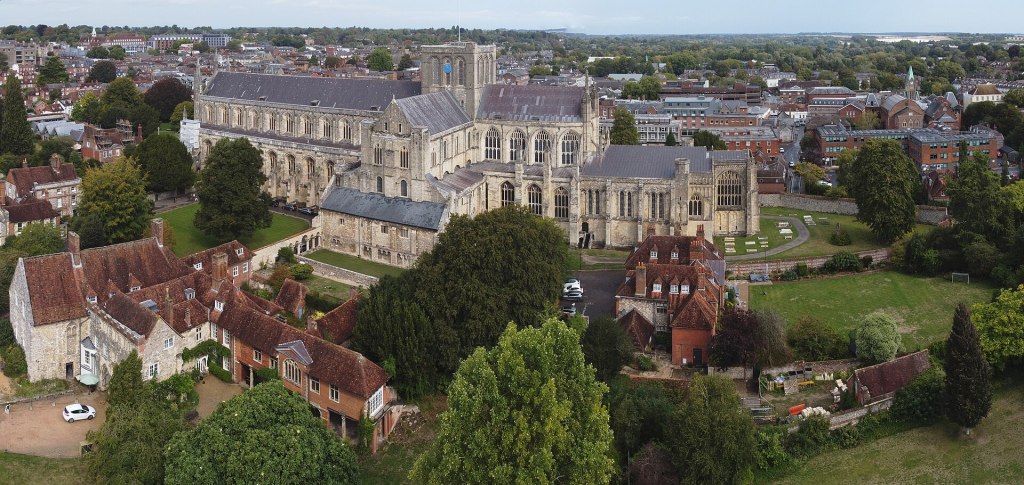
St Swithun’s influence extends beyond folklore. His shrine at Winchester became one of medieval England’s most important pilgrimage destinations before being destroyed during the Reformation in the 16th century. Today, visitors to Winchester Cathedral can still learn about the saint whose name has become synonymous with the English weather.
The day has also found its way into popular culture. It features in literature, music and television, perhaps most famously in David Nicholls’ bestselling novel One Day, where every chapter takes place on St Swithun’s Day across two decades. Even The Simpsons gave the tradition a memorable nod with Bart Simpson’s line: “Is it St Swithun’s Day already?”
Whether the skies are blue or umbrellas are required, St Swithun’s Day remains a delightful reminder that some of Britain’s oldest traditions continue to bring a little folklore, history and conversation to an ordinary summer’s day.


