
Stonehenge and Newgrange, step aside: Brittany’s megalithic marvels are here to rock your world! Join the quest through time and uncover the colossal wonders that make Brittany’s history larger than life and a ‘oui’ bit special.
As Brittany celebrates St Yves’ Day on May 19th, we look at the French region that boasts a rich heritage of Celtic and megalithic monuments that date back thousands of years. These ancient structures provide insight into the cultural and religious practices of prehistoric peoples in the area.
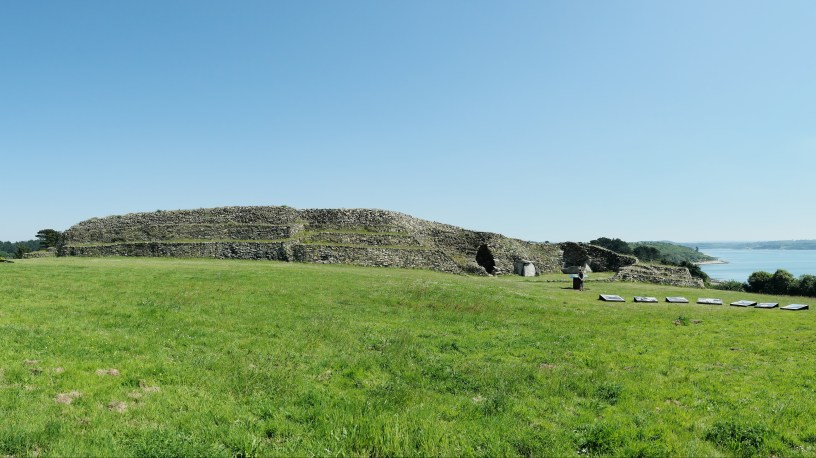
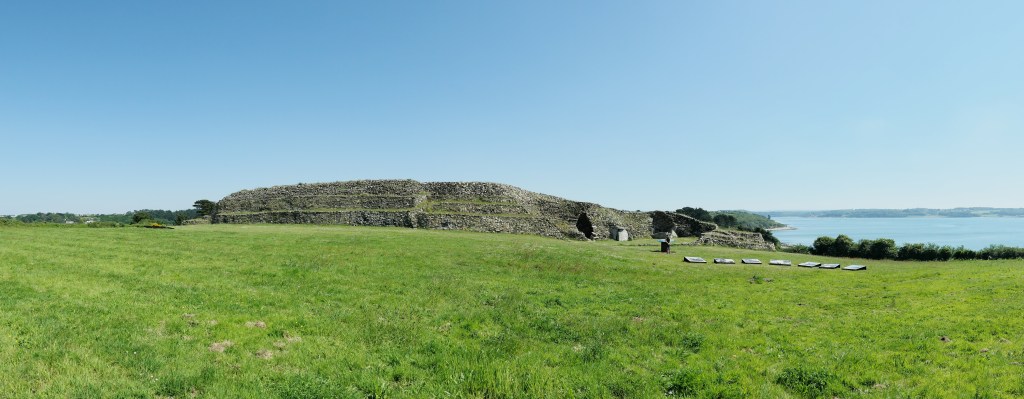
CAIRN OF BARNENEZ
Most impressive of them is the Cairn of Barnenez, often referred to as the “pre-Celtic Parthenon”. This Neolithic structure is one of the oldest known megalithic monuments in Europe, dating back to around 4800 BC. The cairn consists of a large mound of stones covering several burial chambers and is considered to be an exceptional example of early monumental architecture.
The cairn is located close to the sea on the Kernéléhen peninsula. It is one of the oldest man-made structures in the world. It is also remarkable for the presence of megalithic art.
Picture above: Cairn de Barnenez is one of the oldest megalithic monuments in Europe. Credit: Wikimedia Commons
LA TABLE DES MARCHANDS
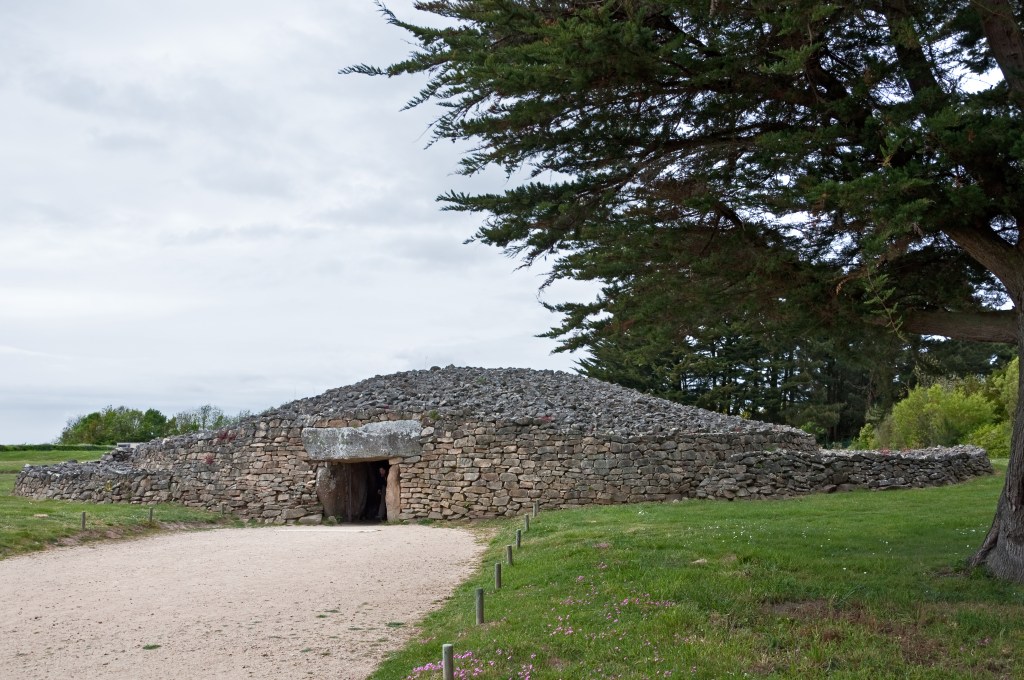
Located in Locmariaquer, Morbihan, the La Table des Marchands is a well-preserved cairn and passage tomb that dates back to around 4000 BC. The site is renowned for the intricate engravings on the rear slab of its central chamber. Situated at an elevation of 45 feet, the entrance to the tomb is precisely oriented to 140° southeast, aligning with the sunrise on the winter solstice. The La Table des Marchands also offers a breathtaking view of the nearby bay, adding to its allure.
Within the central chamber lies a large capstone adorned with the image of a quadruped and an axe, showcasing the artistic craftsmanship of its ancient creators. The rear slab of the chamber is notable for being covered with intricate hooks or shepherd’s crooks, further adding to the mystery and intrigue surrounding the site.
Adjacent to La Table des Marchands stands the imposing Brise Menhir, a monumental standing stone measuring 20 meters in height and weighing an impressive 350 tons.
Nearby, Les Pierres Plates, a passage tomb with an L shape, adds to the richness of the archaeological landscape.
CARNAC STONES
._13.JPG)
The Carnac Stones are thousands of standing stones arranged in rows, alignments, and also dolmens. This exceptionally dense collection of megalithic sites consists of more than 3,000 prehistoric standing stones, including alignments, dolmens, tumuli (burial mounds), and single menhirs (standing stones). These structures, believed to have been erected between 4500 and 3300 BC, are considered the largest such collection in the world. Most of the stones are located within the Breton village of Carnac. The purpose of the Carnac Stones remains a subject of debate among archaeologists, with theories ranging from religious rituals to astronomical alignments.
LA ROCHE-AUX-FEES
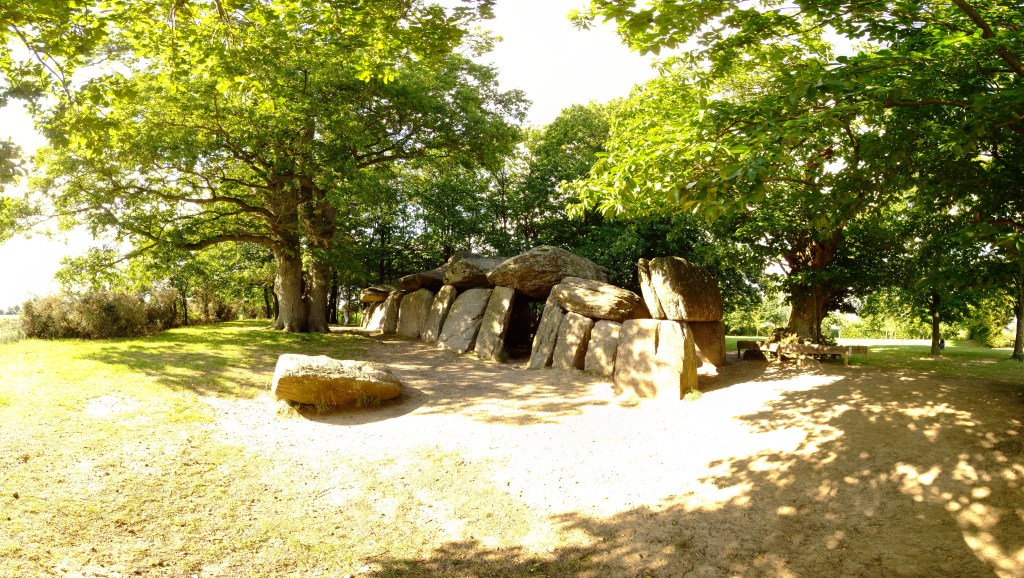
La Roche-aux-Fées located in the village of Essé in Ille-et-Vilaine, is a remarkable dolmen (gallery grave) dating back to 2500 to 2000 BC. It is renowned as the largest dolmen in France. This impressive stone formation measures 64 feet in length, 20 feet in width, and 13 feet in height, weighing around 500 tonnes. Legend has it that its name, which translates as The Rock of the Fairies, stems from a belief that the stones were placed by fairies. This grave offers insights into ancient burial practices.
In addition to the megalithic sites, Brittany has a strong Celtic heritage, with evidence of Celtic settlement dating back to the Iron Age.
The region was inhabited by Celtic tribes known as the Veneti and the Osismii, who left behind artifacts such as coins, pottery, and fortifications.
The Celtic and megalithic monuments of Brittany provide a fascinating glimpse into the ancient history and culture of the region, attracting visitors from around the world.


