
Beltane, or Bealtaine, celebrated on May 1st, is an ancient Celtic festival that heralds the arrival of summer with joyous rituals and festivities, intertwined with gathering flowers and the observance of May Day.
Originating in pre-Christian times, Beltane was a time to honour the sun god Belenus, symbolising the growing strength of the sun as summer approached. Bonfires played a central role, believed to ward off evil spirits and bless the land for fertility and abundance. Alongside these fires, people would often dance around the Maypole and gather flowers from the countryside to adorn altars, homes, and themselves.
In England, Maypole dancing is a big part of the celebrations, with children circling the pole intertwining long coloured ribbons, representing fertility.
Cultural historian Dr Heather Blasdale Clarke, who will be a special guest at Queensland Irish Association’s Bealtaine gathering, told Anglo&Celtic: “The Maypole decorated with flowers and ribbons is ancient, but the addition of long ribbons is modern. If you look at pictures before the mid 1800s, you’ll see people are dancing around the pole, not holding the ribbons.
“The tradition of the ribbons dates from the mid-1800s. I believe it was developed as an exercise for school children.”
Flowers held symbolic significance during Beltane, representing the blooming fertility of the earth. Participants would venture into the countryside to collect blossoms, particularly primroses, bluebells, and hawthorn flowers. These added colour and fragrance to the celebrations and were believed to carry blessings for abundance in the coming season.
May Day customs also involve the crowning of a May Queen or King, a young child who would lead a celebratory parade. Both Beltane and May Day serve as reminders of the earth’s vitality and the promise of new beginnings that come with the arrival of spring and the burgeoning of summer. They are celebrations deeply rooted in nature, highlighting the interconnectedness between humans and the natural world.
Today, Beltane continues to be celebrated by modern Pagans and those interested in reviving ancient traditions.
In Scotland, Beltane is honoured with the lighting of bonfires, dancing, and performances of traditional Gaelic songs. Some choose to climb hills at dawn to greet the first light of summer, echoing ancient rituals that honoured the rising sun.
Ireland’s version of Beltane, Bealtaine is one of the oldest recorded Irish festivals. It has been celebrated for centuries and is deeply rooted in Irish folklore and mythology.
The festival has experienced a resurgence, with communities gathering to rekindle the old customs.
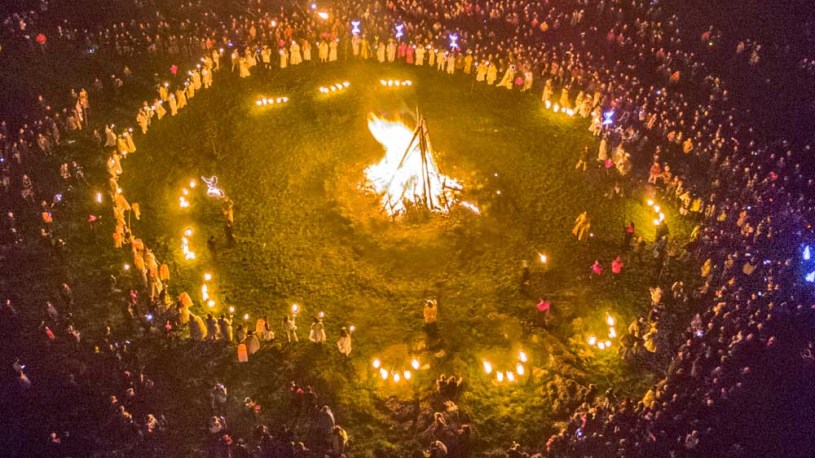
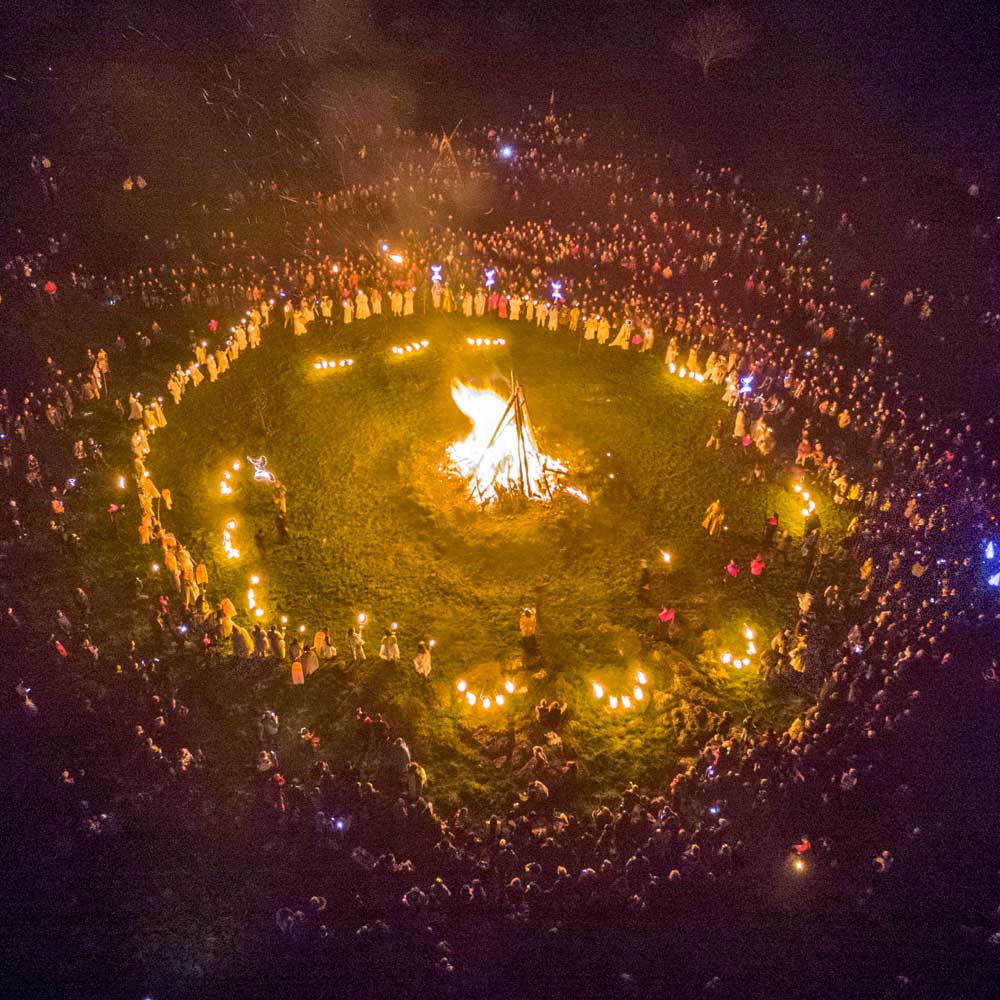
The Bealtaine Fire Festival will take place on Saturday, 11th May on the Hill of Uisneach located in Co. Westmeath, Ireland. The hill is the spiritual and mythological centre of Ireland and was once the site of the coronation of the High Kings of Ireland. In ancient times, a great assembly would gather to witness the fire being lit by the High King.
Here in Australia, Queensland Irish Association (QIA) will hold a Bealtaine family-friendly gathering in Finn McCool’s Fortitude Valley on Saturday, 11th May.
It will be flower themed, with those coming along invited to wear flowery dresses, shirts, shorts, and accessories. There will be children’s activities, music and dancing, and a discussion about the Maypole, with Dr Heather Blasdale Clarke. RSVP for the event on QIA’s Facebook page.
Picture: The lighting of the Bealtaine Fire on the Hill of Uisneach is one of Ireland’s oldest traditions. Credit: Uisneach.ie

